
Why It’s Changed and Why Backups Matter More Than Ever
When people think of data recovery, they often picture a failed hard drive and a specialist recovering files from it. Years ago, that was a very common scenario. Today, things have changed.
Modern computers use different types of storage, and while failures may happen less often, recovering data has become more complex and in some cases not possible at all. Because of this, relying on data recovery alone is no longer a safe strategy. Having a proper backup in place is now more important than ever.
How Data Loss Has Changed Over Time
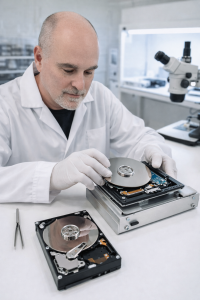 In the past, most computers used traditional hard drives with moving parts. When those drives failed, it was often due to mechanical issues such as worn components or physical damage. In many cases, data recovery labs could repair the drive and recover the data, sometimes with a high success rate.
Today, most systems use solid-state drives (SSDs). These drives are faster and more reliable in day-to-day use, but they work very differently behind the scenes. Instead of storing data in a straightforward way like older drives, SSDs use complex internal processes to manage how data is written and stored.
This means that while SSDs fail less often, when they do fail, the data can be much harder to recover.
Why SSD Data Recovery Is More Difficult
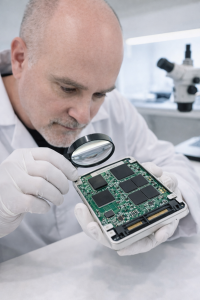 With older hard drives, data could often still be read directly from the platters even if parts of the drive had failed. With SSDs, the data is managed by internal controllers and spread across memory chips in a way that is not easily accessible.
In addition, modern systems use features that actively remove deleted data to improve performance. Once data is removed, it may not be recoverable, even with specialized tools.
Because of this, recovery is not only more complex, it is sometimes not possible at all.
The Rise of “It Was There Yesterday”
Today, we see far fewer cases of completely dead drives and far more situations like:
- The computer will not start
- Files appear to be missing
- Data was accidentally deleted
- Access to files is no longer available
- Files were overwritten or synced incorrectly
In many of these cases, the data may still exist, but accessing it is the challenge. These are often situations we can help with, but they are very different from traditional data recovery.
Online Storage Is Not a Backup
Another major change is how people store their data. Many rely on services like OneDrive, Google Drive, or Dropbox and assume their files are backed up.
These services are designed for syncing and accessibility, not true backup protection. If a file is deleted, changed, or corrupted, that change can sync across all devices.
This creates a false sense of security where people believe their data is protected when it may not be.
The Reality of Data Recovery Today
Data recovery labs still exist and are sometimes necessary, especially for physically damaged drives. However, these services are:
- Expensive
- Time-consuming
- Not always successful
With modern storage, there are situations where recovery is simply not possible, regardless of cost.
The Better Approach: Backup First
Because of how technology has evolved, the most reliable way to protect your data is not recovery after the fact, but having a proper backup in place beforehand.
With a good backup system:
- Files can be restored quickly
- Entire systems can be recovered
- Downtime is minimized
- Stress is reduced
This is far more predictable and cost-effective than attempting recovery after a failure.
How We Help
If you are currently dealing with data loss, we can assess your situation and determine what options are available. In many cases, we can help recover or access your data if it is still present.
More importantly, we help prevent these situations by setting up and monitoring reliable backup solutions so you are protected going forward.
Want to Avoid Data Loss Altogether?
If you are unsure whether your data is properly protected, or if you are relying on cloud storage alone, now is the time to review your setup.
We can help you identify what needs to be backed up and ensure everything is working as expected. Talk with us about protecting your data before it’s too late.